If you’re a homeowner in Epping, chances are you’ve come across the term consumer unit upgrade (or fuseboard replacement) and wondered whether it’s something you actually need — or just something electricians recommend.
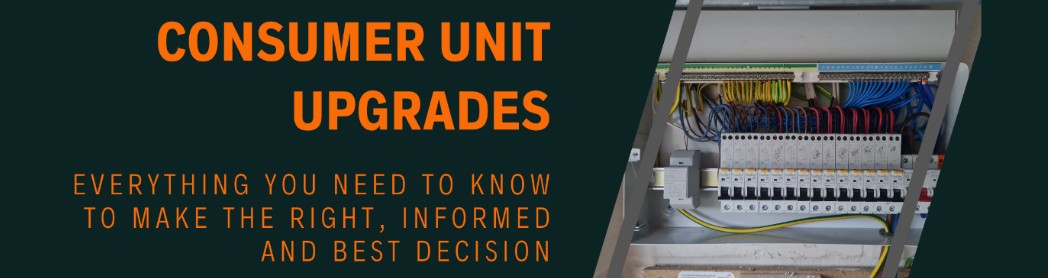
Maybe your fuse box looks old.
Maybe an electrician has mentioned RCD protection.
Or maybe you’re planning other electrical work and have been told your fuseboard needs attention first.
Whatever brought you here, this guide is designed to explain what a consumer unit upgrade really involves, why it matters, and how to approach it properly, without jargon, pressure, or sales talk.
First things first: what is a consumer unit?
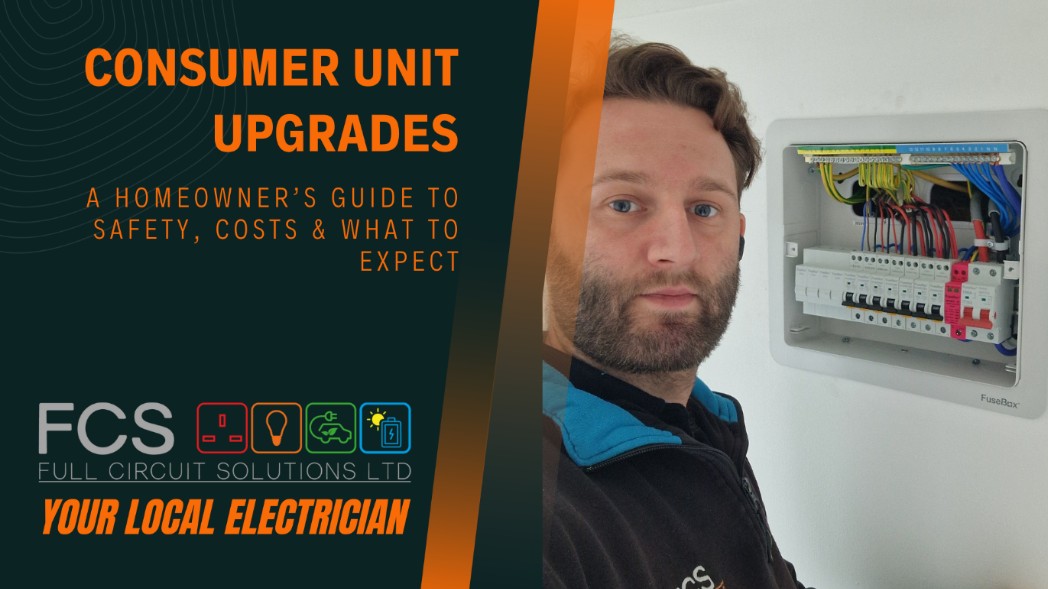
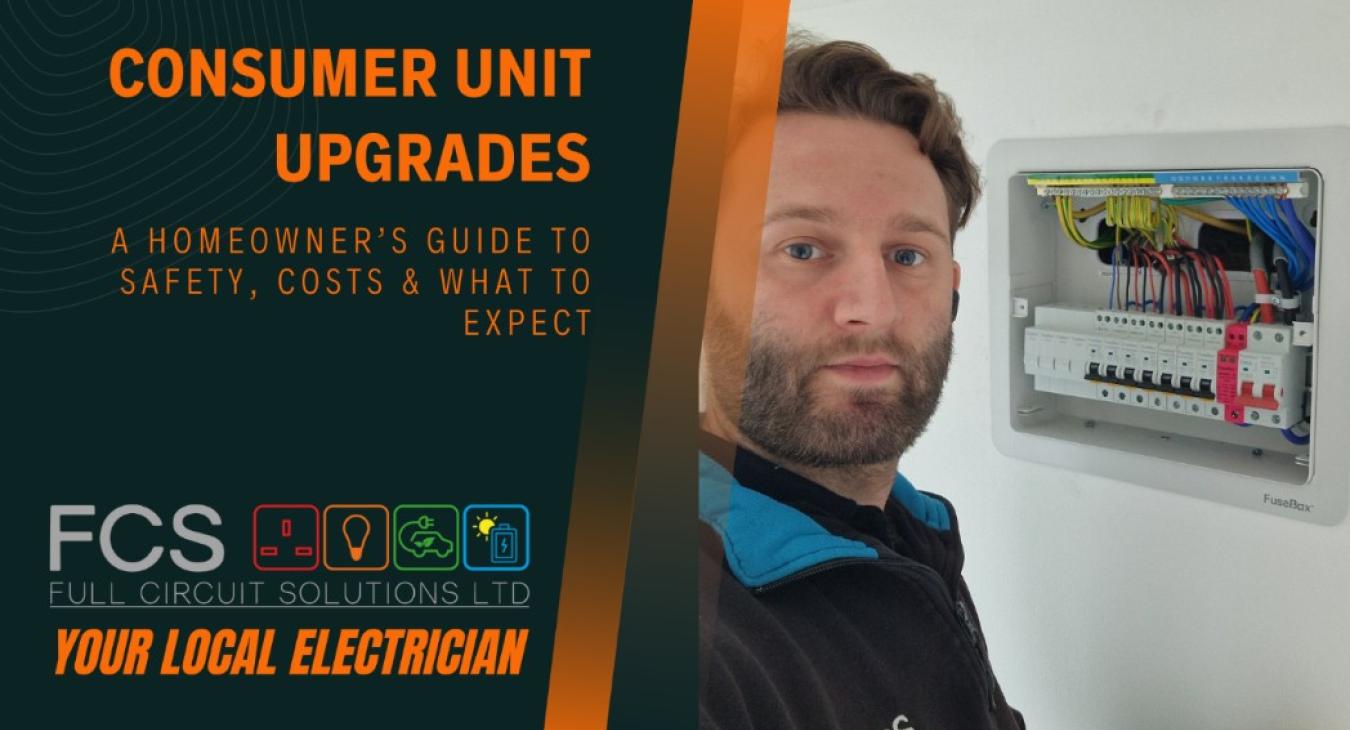
Your consumer unit — commonly called a fuse box — is the central point where electricity enters your home and is distributed to each circuit: lights, sockets, cooker, shower, and so on.
More importantly, it’s where the safety devices live.
A modern consumer unit constantly monitors your electrical system. If something goes wrong — a damaged cable, a fault in an appliance, or electricity flowing where it shouldn’t — it automatically cuts the power to prevent injury or fire.
Older fuseboards still distribute electricity, but many simply don’t offer the level of protection modern homes rely on.
How do homeowners usually realise their fuseboard needs upgrading?
Most people don’t wake up one morning thinking about their fuse box. Instead, it’s usually one of a few common triggers:
- An electrician points it out during other work
- You’re told it doesn’t meet current safety standards
- You notice it looks very old
- You’re having issues with tripping or unreliable circuits
- You’re preparing to sell, renovate, or install something like an EV charger
- When we visit homes across Epping, Harlow, and Sawbridgeworth, we often see the same warning signs.
Common signs your consumer unit is outdated
- Old rewirable fuses instead of modern breakers
- A fuseboard mounted on a wooden backing
- Trip switches with pop-out buttons (often marked BS3871)
- Only one RCD protecting a small number of circuits
- A fuseboard installed before around 2006
Age alone isn’t the only factor, but if your consumer unit dates back before modern RCD protection became standard, an upgrade is very likely needed.
RCDs explained (without the technical waffle)
You’ll hear electricians talk about RCDs, so it’s worth understanding what they actually do.
An RCD (Residual Current Device) is a safety switch designed to protect people. It monitors the electricity flowing through a circuit and switches the power off in milliseconds if it detects something dangerous — such as electricity leaking through a damaged cable or, worse, through a person.
Why this matters:
- It dramatically reduces the risk of fatal electric shock
- It helps prevent electrical fires
- It provides protection older fuseboards simply don’t have
How to spot one:
- If your fuseboard has a button marked “T” or “Test”, that’s usually an RCD.
- Older installations often only protected socket circuits with an RCD. Modern standards require much broader protection, which is why many older fuseboards fall short.
Is upgrading really about safety — or just rules changing?
This is a fair question, and one we hear a lot.
The honest answer is this:
The rules changed because safety improved.
Modern consumer units don’t just meet regulations — they actively protect against risks that older systems can’t detect. Electrical demand in homes has increased massively over the years, and safety technology has evolved to keep up.
Upgrading your consumer unit:
- Reduces the risk of electric shock
- Helps prevent fires caused by hidden faults
- Improves fault detection and isolation
- Makes your home safer for modern appliances
- Compliance matters, but safety is the real reason.
Why we strongly recommend an EICR before a fuseboard upgrade
This is one of the most important — and misunderstood — parts of the process.
An Electrical Installation Condition Report (EICR) is a detailed inspection and test of your existing wiring and circuits. While it isn’t legally mandatory before a fuseboard upgrade, it is strongly recommended and considered best practice.
Why testing first matters
In simple terms, a modern consumer unit is far better at detecting faults than an old one. That’s a good thing — but it also means faults that have gone unnoticed for years can suddenly be picked up.
Carrying out an EICR beforehand allows us to:
- Confirm the installation is safe to reconnect
- Identify issues before the upgrade day, not halfway through
- Avoid circuits being left disconnected unexpectedly
- Provide clear, upfront pricing with no surprises
- Skipping this step can lead to delays, additional costs, and frustration — exactly what most homeowners want to avoid.
What actually happens during an EICR?
Homeowners often worry that an EICR is invasive or disruptive. In reality, it’s structured and predictable.
Typically:
- Power is off for around half a day
- We inspect 20–30% of the installation
This usually includes:
- One socket, one switch, and one light fitting per room
- 100% of circuits supplying single fixed equipment (showers, cookers, EV chargers, hot tubs)
Access is needed so covers can be removed safely for inspection and testing.
What to expect on the day of a consumer unit upgrade
A fuseboard upgrade is usually a full-day job, and it’s important to plan for that.
Power outage
You should expect the power to be off for most of the day.
While some people try to work from home, it’s often more difficult than expected. Internet hotspots may work, but laptop batteries rarely last all day, and simple things like making a hot drink or cooking lunch aren’t possible.
A realistic “on the day” checklist
❌ No electricity for most of the day
💻 Working from home not recommended
☕ No kettle, oven, or microwave
🐶 Pets secured away from the work area
🔧 Testing carried out before circuits are re-energised
For this reason, we usually carry out:
EICR on one day
Consumer unit upgrade on another
While same-day completion is sometimes possible, it increases the risk of delays if any issues arise.
How much does a consumer unit upgrade cost?
Costs vary depending on the size and condition of the installation, but we’re always upfront about typical figures.
Guide prices
EICR: from £225 + VAT
Consumer unit upgrade: from £750 + VAT
Typical 3-bedroom home
EICR: around £250 + VAT
Fuseboard upgrade: around £800 + VAT
What can increase the cost?
- Larger properties with more circuits
- Additional sub-fuseboards
- Older installations needing remedial work
- Faults identified during testing
This is exactly why carrying out an EICR first is so important — it allows informed decisions before committing to the upgrade.
Can everything be done in one visit?
Sometimes, yes — but it’s not usually the best approach.
Separating the inspection and the upgrade:
- Reduces pressure on the day
- Allows time to review findings properly
- Prevents rushed decisions
- Minimises disruption if issues are found
For most homeowners, it’s the smoother and safer route.
Why using a local electrician in Harlow matters
Working with a genuinely local electrician means:
- Faster response times
- Familiarity with local housing stock
- Clear accountability
- Ongoing support if future work is needed
We regularly carry out consumer unit upgrades in Epping, Harlow, and Sawbridgeworth, helping homeowners improve safety with a clear, structured, no-nonsense process.
Common questions homeowners ask
Is it dangerous to keep an old fuseboard?
Older fuseboards often lack modern protection, increasing the risk of shock and fire.
Will a new consumer unit stop nuisance tripping?
Often, yes — but only if underlying faults are identified first.
Do I need to upgrade to sell my house?
Not always, but outdated fuseboards frequently appear on surveys and EICRs.
How long does the whole process take?
Usually half a day for the EICR and one full day for the upgrade.
Thinking about upgrading your consumer unit?
If you’re considering a fuseboard upgrade in Epping or nearby, the safest approach is a tested, transparent process — starting with an EICR and moving forward with clarity.
If you’d like advice, a quote, or simply an honest conversation about whether an upgrade is needed, get in touch and we’ll talk it through properly.